EIA Licence Kenya: Do You Need One? 2-Minute Self-Check
If you are planning a new project, an expansion or a change of land use in Kenya, you may need an Environmental Impact Assessment (EIA) licence from NEMA before work starts. Many developers find out too late, after the contractor is on site or a county office asks for the licence. This guide gives you a two-minute self-check, then explains the risk categories, the steps, the fees and how an EIA differs from the annual environmental audit.
Quick answer: Projects listed in the Second Schedule of the Environmental Management and Co-ordination Act (EMCA) need an EIA before they begin, and NEMA issues the EIA licence before the project starts. Low and medium-risk projects start with a summary project report. High-risk projects go through a full EIA study. The work must be done by an expert registered with NEMA. If your business is already operating, you are more likely looking for the annual environmental audit.
This is general information, not legal advice. Classifications and fees can change, so confirm details with NEMA or a registered expert before you act.
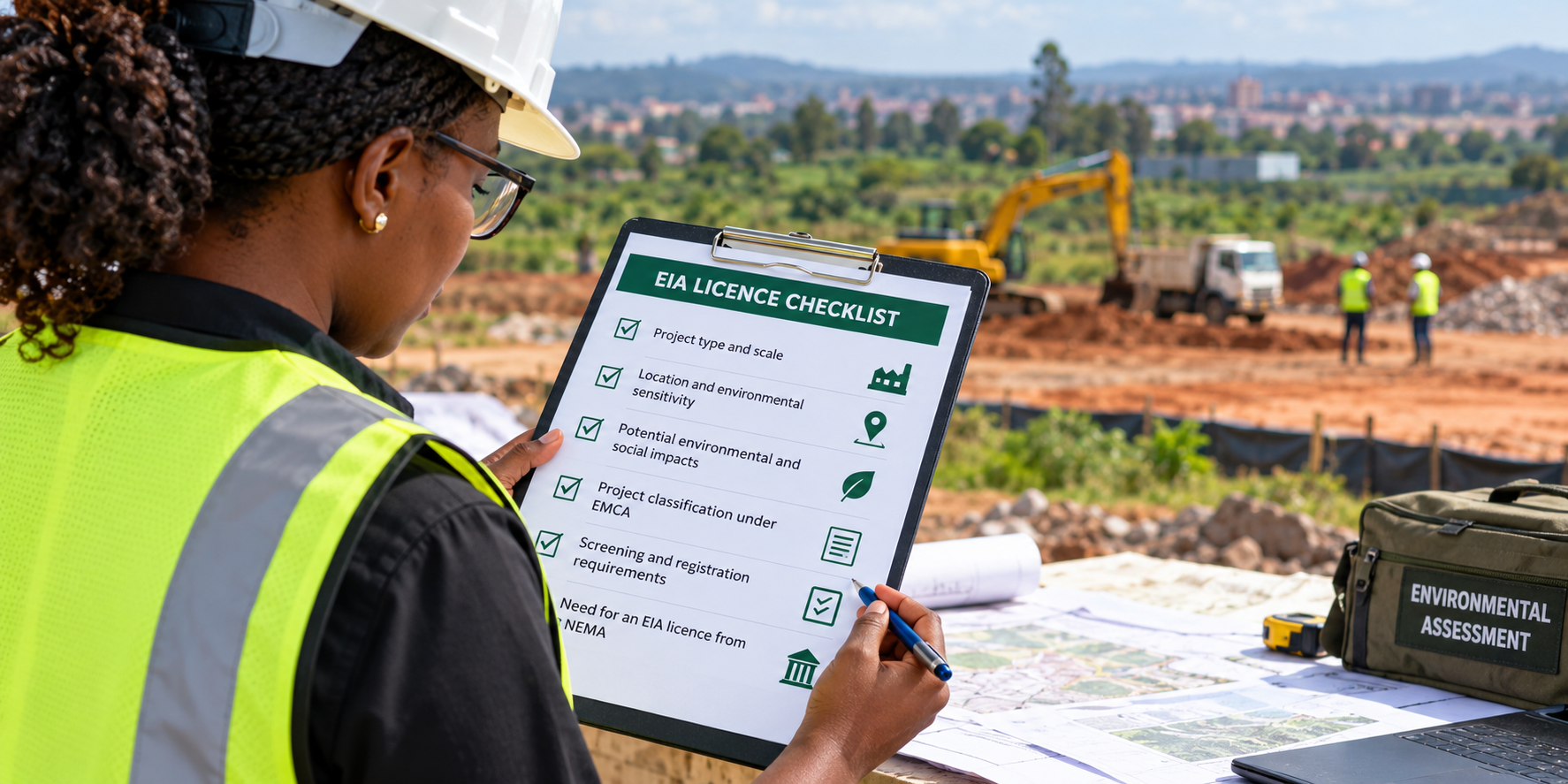
The 2-minute self-check
Answer yes or no to each question about your project.
- Is it a new project, an expansion or a change of land use that has not started yet?
- Does it fall in a sector named in the Second Schedule, such as urban development, transport, dams and rivers, mining, forestry, agriculture or waste disposal?
- Is it out of character with its surroundings, or much larger than the buildings and activities around it?
- Is the site in or near an environmentally sensitive area, for example a wetland, a river bank or a forest?
- Does it go beyond the medium-risk examples, such as farming above 100 hectares, a new major road, a storage dam, a hospital, a sanitary landfill or an oil refinery?
- Will a county approval, a sector licence or a lender ask you for an EIA licence?
How to read your answers. A yes to question 1 together with a yes to any of questions 2 to 6 means you should assume you must go through NEMA’s EIA process. Ask a registered expert to screen the project before you commit to a schedule or a contractor.
A no to every question does not clear you automatically. In a case reported by Oraro Advocates, the court said it is not enough to read through the Second Schedule. Proponents should consider the project’s characteristics, location, size and its combined effect with neighbouring developments. If your project is new, get it screened.
If your business is already running, skip ahead to the section on the EIA versus the annual audit.
Which projects need an EIA in Kenya?
NEMA says the projects that must go through an EIA are those specified in the Second Schedule of EMCA. The Schedule has two parts. The first is general: any activity out of character with its surroundings, structures out of scale with the neighbourhood and significant changes in land use. The second lists sectors including urban development, transport, dams and rivers, mining, forestry and agriculture, as well as waste disposal.
There is a practical reason to get this right. NEMA states that licensing authorities should not issue permits unless the applicant produces an EIA licence. A project without one can be stopped at the county, at a sector regulator or at the bank, even if the building is already half done.
Since 2019 the Second Schedule has also sorted projects into low, medium and high risk (Legal Notices 31 and 32 of 2019). That classification decides where your process starts.
Project report or full EIA study? Low, medium and high risk
| Risk category | Examples named in the 2019 Second Schedule | What you submit |
|---|---|---|
| Low | Places of worship, community water projects, dispensaries and clinics, local roads, schools of up to 100 learners, warehouses up to 1,400 square metres | Summary project report |
| Medium | Multi-dwelling housing of up to 100 units, hydropower up to 10 MW, solar farms, service stations, abattoirs, telecommunication infrastructure, farming up to 100 hectares, quarrying | Summary project report; NEMA may ask for a comprehensive project report |
| High | Any project in an environmentally sensitive area, new major roads, storage dams, hospitals, large-scale agriculture above 100 hectares, sanitary landfills, oil refineries, anything out of character with its surroundings | Full EIA study |
These are examples, not the whole list, and the classification can be amended, so ask NEMA or a registered expert to confirm where your project sits.
Low and medium risk. You submit a summary project report on the likely environmental effects. NEMA screens it within five days. If significant adverse effects are possible, NEMA asks for a comprehensive project report. If not, it can exempt you from that step and approve the project to proceed. A low-risk project is therefore not exempt from NEMA: it still goes through screening.
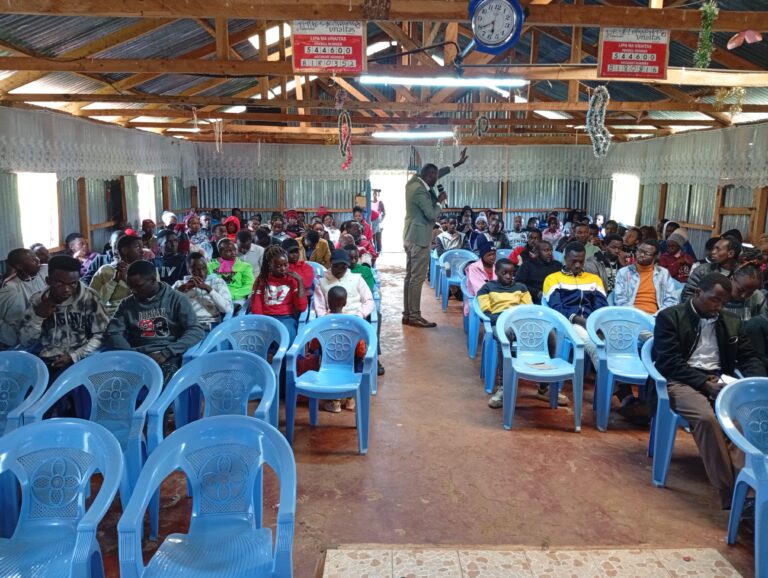
High risk. The project goes through the full EIA study: scoping, terms of reference approved by NEMA, baseline studies, public participation and a study report. NEMA says the proponent must hold at least three public meetings with the affected communities.
In every case, the report must be prepared by an EIA expert registered with NEMA. A report from someone who is not registered is unlikely to be accepted.
EIA licence steps, timelines and fees in Kenya
- Screen your project. Ask a registered expert to check the Second Schedule and the risk category, and submit the summary project report if your project is low or medium risk.
- Appoint a NEMA-registered expert or firm. NEMA publishes a register of licensed experts on its website. Check the registration before you sign.
- Scope the study. For high-risk projects, agree terms of reference with NEMA before the study begins.
- Collect baseline data and consult the public. Hold at least three public meetings with affected communities and record the views raised.
- Submit the report to NEMA. NEMA links to its licensing portal at licensing.nema.go.ke from its EIA page. Confirm the current submission channel and any hard copy requirements before you submit.
- Respond to review comments. NEMA shares the study report with lead agencies and publishes a notice inviting public comments. Plan for questions and revisions.
- Receive the decision. NEMA approves, approves with conditions or rejects the study report. An approved project receives an EIA licence before it starts, and the licence sets the period within which the project must begin.
- Build, monitor and audit. Follow the environmental management plan, then plan your first environmental audit.
| Item | Amount or period |
|---|---|
| Screening of a summary project report | Within 5 days (Regulation 7) |
| Decision on a project report | Within 45 days of submission (Regulation 10) |
| Decision on a study report | Within 3 months of receipt (Regulation 23) |
| Appeal to the National Environment Tribunal | Within 60 days of the decision (Regulation 46) |
| EIA licence fee | 0.1% of total project cost, minimum KSh 10,000, no upper cap (NEMA’s EIA page) |
| Public notices in the Gazette, newspapers and radio | Paid by the developer |
| Licence surrender, transfer or variation | KSh 5,000 |
| Expert’s professional fee | Set by the expert and separate from NEMA’s fee |
NEMA’s page also still shows an older 0.05% figure before noting the revision to 0.1%, so confirm the current rate with NEMA before you budget. These are the statutory periods. Real timelines are longer once you add scoping, baseline studies, public meetings and revisions.
Do not rely on deemed approval. Section 58(9) of EMCA lets a developer who hears nothing within the period start work. CM Advocates notes that this does not clear sector licences, which still need an EIA licence, and that in Bogonko v NEMA the court declined to stop NEMA from auditing or cancelling a project started this way. Silence is not a licence.
EIA licence or annual audit: which one do you need?
The two are often confused. An EIA looks ahead: it is done before a project starts and decides whether and on what conditions it can go ahead. An audit looks back: it checks an operating project against its environmental management plan and licence conditions, and for operating businesses it is part of keeping the annual NEMA licence in good standing.
| Your situation | What you need |
|---|---|
| New project not yet started | An EIA (project report or full study) and an EIA licence before work begins |
| Expansion or change of land use | An EIA covering the change; ask NEMA what applies |
| Operating business with an EIA licence | The annual environmental audit, with 31 December as NEMA’s published deadline |
| Operating business that never had an EIA | An environmental audit, usually starting with an initial audit that sets the baseline |
Once a project with an EIA starts operating, the first audit is due within 12 months of starting operations, and no later than 24 months after completion, whichever comes first (Regulation 31(4)(b)). Treat the audit date as part of your project plan from day one.
See our guide to the NEMA annual environmental audit for who must file and how to prepare.
Common EIA mistakes to avoid
Six mistakes cause most of the delays and disputes:
- Starting works before the licence. NEMA’s position is that the EIA licence is issued before the project begins. Site clearing and foundations count as starting.
- Assuming a small project is exempt. Low-risk projects still go through screening, and a project not named in the Schedule may still need an assessment because of its location or its effect on neighbours.
- Relying on deemed approval. Silence from NEMA after the statutory period is not a safe basis to build on.
- Hiring someone who is not registered. The report must be prepared by an EIA expert registered with NEMA, so check the register first.
- Treating public participation as a formality. NEMA expects at least three public meetings with affected communities, and unresolved objections can delay the decision or lead to an appeal.
- Forgetting the audit. The licence is not the end. Your first audit is due within 12 months of starting operations, and annual audits follow.
Get your EIA screened with Biomaps
Biomaps is a Kenya-based sustainability consultancy that helps businesses, cooperatives and institutions meet their environmental obligations. Our environmental and social impact assessment (ESIA) service helps you work out whether your project needs an assessment, which category it falls in and what to prepare. Once you are operating, our statutory environmental audits service covers the annual audit, and our wider environmental and social compliance services cover the rest.
Not sure whether your project needs an EIA? Email info@biomaps.co.ke with the project type, the location and the size, and we will tell you what to do first. You can also browse our past projects.
Frequently asked questions
Do I need an EIA licence for a small project?
A small project in the low-risk category still submits a summary project report, which NEMA screens within five days. NEMA may then approve it to proceed without a full study. A project that looks small but sits in a sensitive area or is out of character with its surroundings can be classed as high risk.
How much does an EIA licence cost in Kenya?
NEMA’s EIA page states a licence fee of 0.1% of the total project cost, with a minimum of KSh 10,000 and no upper cap. You also pay your expert’s professional fee and the cost of public notices. Confirm the current rate with NEMA.
How long does an EIA take?
The Regulations give NEMA 45 days to decide on a project report and three months to decide on a study report. In practice the whole process takes longer, because scoping, baseline studies, public meetings and revisions come before and during those periods.
Who can prepare an EIA in Kenya?
An expert or firm of experts registered with NEMA. Lead experts need to meet the qualification criteria in the Regulations, and NEMA publishes a register of licensed experts.
Can I start building if NEMA has not replied?
EMCA allows a developer to start if no decision is communicated within the period, but this is risky. Sector licences still require an EIA licence, and the court in Bogonko v NEMA declined to stop NEMA from auditing or cancelling a project started this way. Take legal advice before relying on it.
Is an EIA licence the same as the annual audit?
No. The EIA is done before a project starts. The environmental audit checks an operating project against its management plan and licence conditions, and is part of keeping your annual NEMA licence in good standing.
What if my project is already running without an EIA?
Speak to a registered expert. Regulation 31 requires the proponent of an ongoing project to undertake an environmental audit, and NEMA’s guidance treats an initial audit as the baseline for existing facilities.